You will only see this page once - so watch this special message from Dr. Richard Nongard now
Your Client Says: "It Feels Like My Feet Are On Fire."
You can offer them something more — if you know the specific methods.
Hypnotic Methods for Treating Chronic Nerve Pain
Saturday, October 10, 2026
12:00 Noon EASTERN
to 2:00 PM EASTERN
And nothing you were taught in your certification course seems to touch it.
Chronic nerve pain is different. It doesn't respond the way muscular tension responds. It doesn't respond the way emotional pain responds. Burning. Electric. Stabbing. Pain in a limb that isn't even there anymore.
If you're a hypnotist or a coach, sooner or later one of these clients is going to walk through your door:
Peripheral Neuropathy
nerve damage outside the brain and spinal cord, producing burning or tingling in the hands and feet, most often linked to diabetes.
Radiculopathy (Pinched Nerve)
compression or inflammation of a nerve root near the spine. Sciatica is the best-known example, shooting pain straight down the leg.
Trigeminal Neuralgia
sudden, severe, electric shock–like pain on one side of the face.
Postherpetic Neuralgia
burning nerve pain that lingers for months or years after a shingles rash has healed.
Complex Regional Pain Syndrome (CRPS)
a severe, long-lasting nerve disorder, usually in an arm or a leg, following injury, trauma, or surgery.
Phantom Limb Pain
pain felt in a limb that has been amputated, because the brain keeps sending signals to a body part that is gone.
These clients have usually already tried medication.
Many have already been told to "learn to live with it."
This Isn't Wishful Thinking. Here's What the Research Shows.
For decades, hypnosis for pain was something you either believed in or you didn't. That era is over. Researchers have pooled together the results of hundreds of controlled studies, and the picture that emerges is encouraging and remarkably consistent.
Saturday, October 10, 2026
12:00 Noon EASTERN
to 2:00 PM EASTERN

Research shows roughly 3 out of 4 people get real relief.
One landmark review pulled together 18 studies involving more than 900 participants and reported that about 75% of people experienced meaningful pain relief from hypnosis — and that this held across different kinds of pain.
Research shows that for the right client, pain can drop by nearly half.
A much larger review examined 85 controlled studies with more than 3,600 participants. Here's the finding that should interest every practitioner reading this: when hypnotists used direct suggestions for pain relief with clients who were highly responsive to hypnosis, those clients reported pain dropping by about 42% on average. Clients with a moderate response to hypnosis still reported roughly a 29% reduction.
For the people in those studies, that was the difference between sleeping through the night and not.
The reviewers concluded that hypnosis can deliver genuine, meaningful pain relief for most people, and that it may represent a real alternative to medication — with essentially no side effects.
Notice what that finding hinges on: the specific suggestions you use, and how well you've matched them to the client in front of you. That's not luck. That's a skill. And it's exactly what this training is about.
And for nerve pain specifically, the findings are strong.
Here's where it gets directly relevant to your practice. A 2022 review that looked specifically at long-term muscle and nerve pain found that hypnosis produced a solid, measurable drop in how intense people's pain was — and, just as importantly, a drop in how much that pain interfered with their daily lives. The relief was still measurable when researchers checked back months later.
That same review surfaced something you can build a practice around: the results were substantially stronger when treatment ran eight sessions or more — and noticeably weaker when it ran fewer. Not one magic session. A structured course of care.
Research shows it works over Zoom — in a real clinical trial.
Perhaps the most striking recent finding comes from a rigorous trial of 127 adults living with chronic pain following spinal cord injury. They received six weekly one-hour sessions — delivered entirely by telephone or Zoom — plus daily self-hypnosis practice at home using session recordings.
Compared to people who continued with their usual treatment, the hypnosis group reported significantly less pain at six weeks, and less still at twelve weeks. Their depression improved significantly more, as well.
And the headline for you: in that trial, the participants whose pain was purely neuropathic improved more than those with mixed pain.
Read that one more time. The nerve pain clients did better than everybody else.
When You Register and Attend
You Will Get These Answers and Techniques!
This is a working session, not a lecture. In two focused hours I'm going to hand you the actual protocols:
Why nerve pain calls for a different hypnotic approach than tension pain, inflammatory pain, or emotional pain — and the single mistake most hypnotists make in session one.
The exact wording of direct pain-relief suggestions — the one variable the research points to over and over as the difference between a session that helps and one that doesn't.
Sensory substitution and transformation techniques for burning, electrical, and shooting sensations — including what to do when "numbness" is the wrong target.
Glove anesthesia, dial work, and switch-box metaphors adapted specifically for neuropathic presentations.
Phantom limb protocols — including how hypnosis pairs with mirror-box principles.
How to teach self-hypnosis for daily home practice — the ingredient that shows up in nearly every successful study.
Scope-of-practice language — how to talk about your work ethically and legally, how to word a physician referral letter, and exactly what not to promise.
A session-by-session plan for an 8-session arc, because that's the length the evidence actually supports.
If You're a Hypnotist, This Is Your Highest-Value Niche
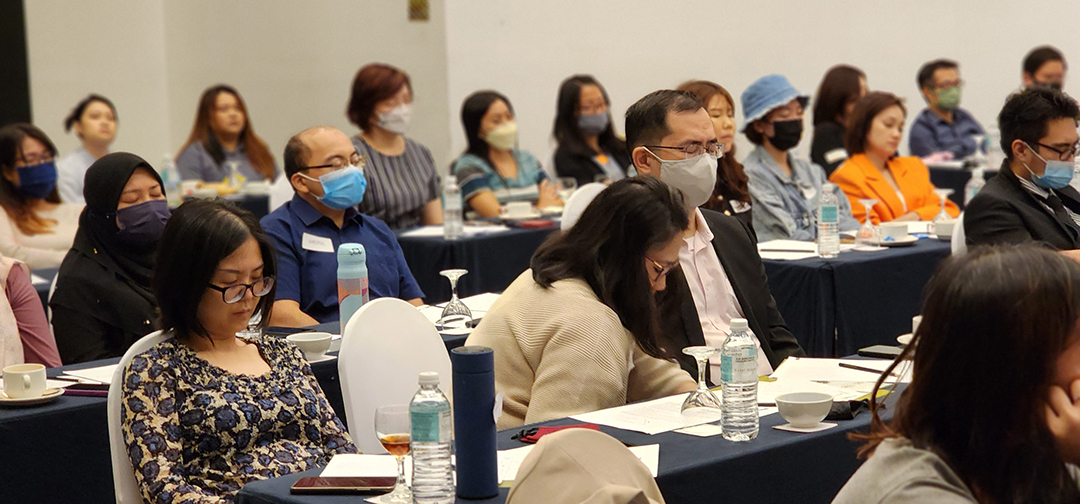
Chronic nerve pain clients are motivated, they are underserved, and they are almost never one-session clients. An eight-session, evidence-informed package is a legitimate, ethical, and highly profitable offer — and it's an offer almost nobody in your market is positioned to make.
You also stop competing on price with every smoking-cessation ad in town. Medical referral relationships are built on specificity. "I work with neuropathic pain" opens doors that "I do hypnosis" never will.
And as that Zoom trial demonstrated — your client doesn't have to live in your city.
If You're a Coach, This Expands What You Can Actually Deliver
Your clients' pain is already in your sessions — it's in their fatigue, their sleep, their irritability, their abandoned goals. You'll learn how hypnotic language, relaxation architecture, and suggestion structure can be integrated into coaching within an appropriate scope of practice — and how to build the referral relationships that make you a genuine asset to a client's care team rather than a bystander to their suffering.
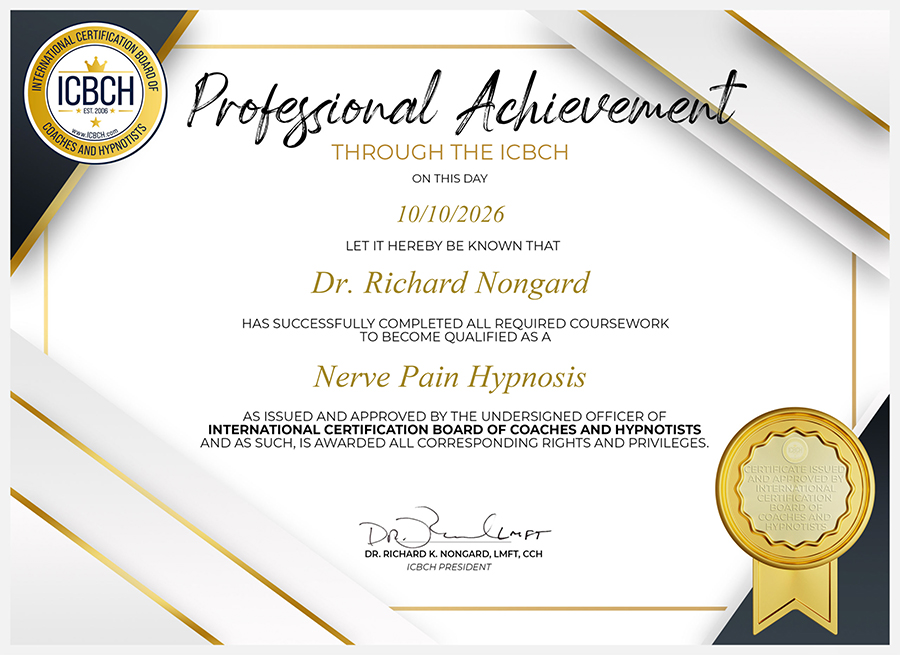
You'll Receive an ICBCH Certificate of Completion
Every participant receives an official ICBCH Certificate of Completion — documentation of your training for your wall, your website, your professional portfolio, and your continuing education records. Replay viewers receive the certificate too.
Here's Everything You Get for $36
Live online training — October 10, 12:00 Noon Eastern
Unlimited 24/7 access to the full replay
ICBCH Certificate of Completion
Complete downloadable protocol and script materials
Live Q&A — bring your toughest case
Total investment: $36.
That's less than you'll charge for twenty minutes of your time. It's less than dinner. And it's the entire difference between turning a nerve pain client away and becoming the person in your city who knows how to help them.
Can't Make the Date? Pre-Register Now.
Don't skip this class just because October 10 doesn't work for you.
Pre-register right now and you'll receive full, unlimited 24/7 access to the complete replay — watch it on your own schedule, from any device, as many times as you want. Pause it. Rewind it. Take notes. Come back to it next year when that referral finally shows up.
Replay participants receive the same ICBCH Certificate of Completion and the same downloadable materials. Nothing is held back.
Your $36 buys the training, not the hour.
About Your Instructor
Dr. Richard Nongard, Psy.D.
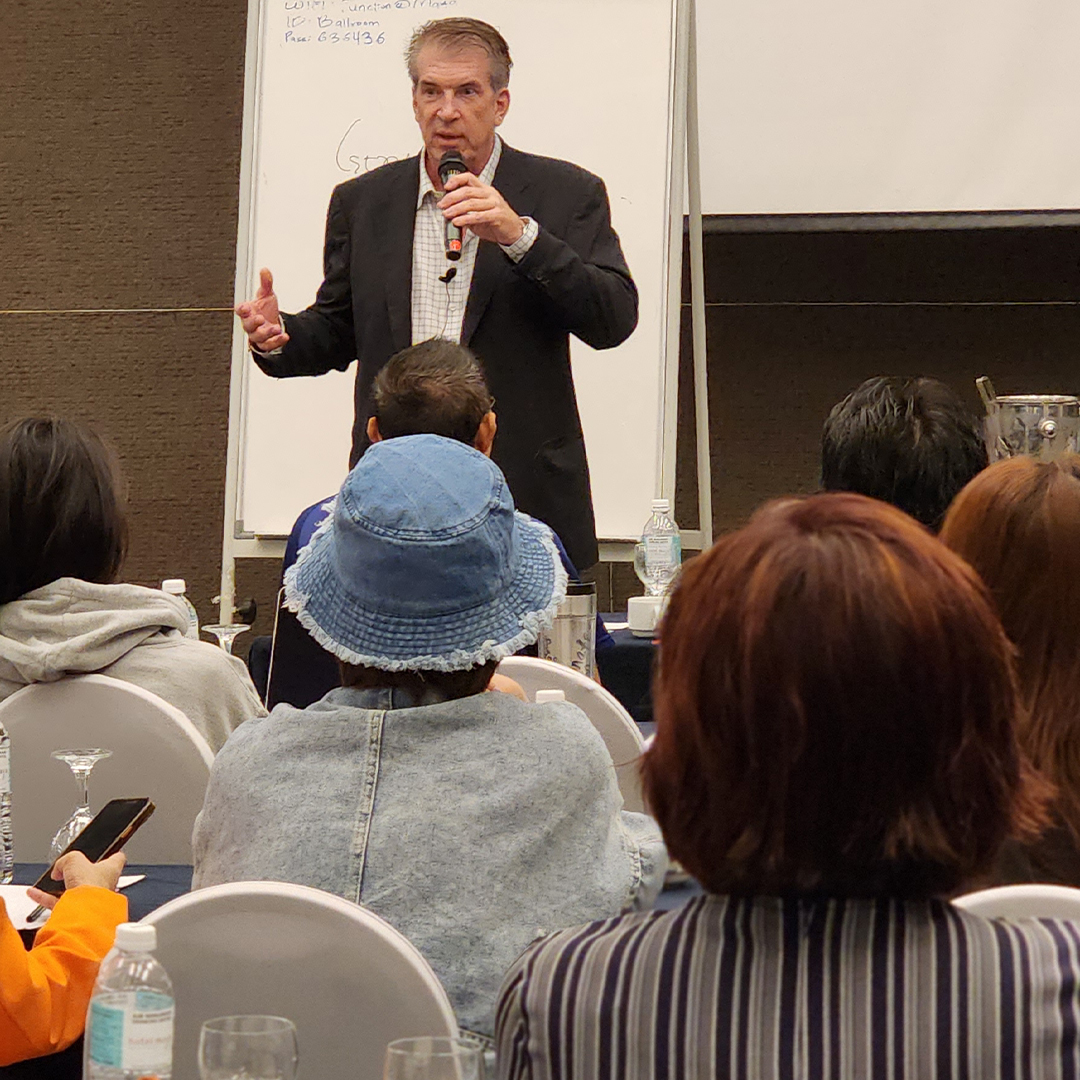
Hi — I'm Dr. Richard Nongard.
I've spent my career teaching clinical hypnosis to practitioners around the world, and I've written and taught extensively on the use of hypnotic methods for pain management, behavior change, and clinical practice. I hold a doctorate in psychology (Psy.D.), and I'm a Board Certified Professional Counselor and a Licensed Marriage and Family Therapist.
My work is grounded in two things: what the research actually supports, and what actually works in the room with a real client sitting in front of you. I have no patience for mystical claims, proprietary "systems" sold at ten times their worth, or techniques that sound impressive in a demo and collapse in practice. What I teach, I use.
I train through the International Certification Board of Clinical Hypnotherapists (ICBCH), and I've had the privilege of teaching hypnotists, coaches, counselors, physicians, and dentists on six continents.
Chronic nerve pain is one of the most difficult presentations you will ever face — and one of the most rewarding to work with well. On October 10, I'll show you exactly how I approach it.
I hope you'll join me.
— Dr. Richard Nongard, Psy.D.
One Last Thing
Somewhere out there is a person who has been told there's nothing more to be done about the burning in their hands. They've stopped mentioning it, because they're tired of the look people give them.
They're going to find their way to someone's office.
Make sure that someone knows what to do.
Research references:
Montgomery, G.H., DuHamel, K.N., & Redd, W.H. (2000). A meta-analysis of hypnotically induced analgesia: How effective is hypnosis? International Journal of Clinical and Experimental Hypnosis, 48(2), 138–153.
Thompson, T., Terhune, D.B., Oram, C., et al. (2019). The effectiveness of hypnosis for pain relief: A systematic review and meta-analysis of 85 controlled experimental trials. Neuroscience & Biobehavioral Reviews, 99, 298–310.
Adachi, T., Fujino, H., Nakae, A., Mashimo, T., & Sasaki, J. (2014). A meta-analysis of hypnosis for chronic pain problems: A comparison between hypnosis, standard care, and other psychological interventions. International Journal of Clinical and Experimental Hypnosis, 62(1), 1–28.
Langlois, P., Perrochon, A., David, R., et al. (2022). Hypnosis to manage musculoskeletal and neuropathic chronic pain: A systematic review and meta-analysis. Neuroscience & Biobehavioral Reviews, 135, 104591.
Jensen, M.P., et al. Hypnotic cognitive therapy for chronic pain in spinal cord injury: A randomized controlled trial. Neurology. doi:10.1212/WNL.0000000000214836
Findings across the hypnosis and pain literature are not unanimous, and individual response varies considerably. Nothing in this training is presented as a cure or a guaranteed outcome. This workshop is professional education for practitioners; it is not medical advice and does not establish a treatment relationship. Hypnosis for chronic pain is appropriately offered as a complementary approach alongside, not in place of, medical care. Practitioners should work within their scope of practice and applicable state or national law.
OptimizePress Popup Overlay
REGISTER AND JOIN US!

Nerve Pain Hypnosis
$36.00
When You Register and Attend You Will Get These Answers and Techniques!
This is a working session, not a lecture. In two focused hours I'm going to hand you the actual protocols: